-
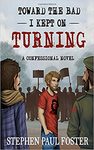
Toward the Bad I Kept on Turning: A Confessional Novel
Stephen Paul Foster
“Who will guard the guardians?” is the theme of this fictional “dumpster-dive” into the deep vaults of governmental and university corruption in the baby-boomers’ America. The anti-hero conman, a fusion of Harry Flashman and Forest Gump, takes the reader on a tour of his life’s story. He embarks on one hair-raising adventure after another, many of which draw him into relationships with some of the better-known movers and shakers of the era such as Bill and Hillary Clinton, Raul Castro, Jim Jones, Slobodan Milošević and John McCain. His adventures always seem to be “turning bad,” whether conniving with E. Howard Hunt to overthrow Chile’s Salvador Allende, bombing government buildings at the behest of Bill Ayers or serving as a hitman for Fidel Castro. From our lovable but cynical anti-hero we get a conman’s perspective and sardonic commentary on many of the events that defined America in the last fifty years – the Vietnam War, JFK’s assassination, 9-11, the CIA’s secret operations, the bombing of Kosovo, the wave of U.S. domestic terrorism of the 1970s and the election of Barack Obama.
-

Light in the River: Poems
David Lee Garrison
In accessible poems that are much like stories, David Lee Garrison finds ambiguity and mystery beneath the surface of everyday experience. He rewrites the Biblical creation myth, positing Dog before Man; he imagines John Keats as a baseball player; he watches children play Hide and Seek and rejoice in finding and being found; he ponders the epitaphs in an old graveyard; and, he remembers a singer who came in one measure too early on the Hallelujah Chorus. The poet envisions life as a meandering journey through a summer afternoon by the river–humid and intense, with revelation everywhere, like leaves and shadows on the water.
-

Mexico: A Concise Illustrated History
John Sherman
This engaging book provides a brief, accessible introduction to the broad sweep of Mexican history, from pre-contact civilizations to the present. John Sherman explores the nation’s rich pre-Columbian heritage, including the great pyramids of Teotihuacán, while a stand-alone chapter addresses the Yucatán Maya, including a detailed account of Chichen Itzá. The drama of the conquest ushers in Mexico’s three colonial centuries. The author brings to life the pageantry of viceregal reign, the power of the Roman Catholic Church, the poignancy of Sor Juana’s poetry, the Virgin of Guadalupe, hacendados, silver barons, and pirates. The turmoil of the Hidalgo revolt, the loss of Texas, a cataclysmic war with the United States, French invasion, and the triumph of Benito Juárez define the era of early nationhood. He shows how the shrewd dictator Porfirio Díaz is toppled in rebellion, as Emiliano Zapata and Pancho Villa ride again. Exploring the breadth of the twentieth century, Sherman uncovers the roots of a vested oligarchy that still dominates Mexico today. In clear, vibrant style, he tells the dramatic tale of a nation whose history is integrally tied to that of the United States. Focusing on political and economic processes, the author provides a crisp narrative, enhanced with a rich array of maps and illustrations.
-
Guide to Intellectual Disabilities: A Clinical Handbook
Julie P. Gentile, Allison Cowan, and David Dixon
This book serves as a reader-friendly training and reference resource for medical professionals working with dual diagnosis (DD) patients. Written by experts in the field, the text covers the unique psychiatric and medical assessment topics as well as neurologic conditions, best interviewing techniques, medication guidelines, and other topics that may be challenging when working with a DD patient. Each chapter opens with case vignettes to easily demonstrate a particular scenario and is followed up with concise, practical information. All chapters include tables that summarize the clinical pearls as well as the DSM-5 and DM-ID-2 diagnostic criteria that is most vital to care. Guide to Intellectual Disabilities is an excellent resource for all clinicians who will work with DD patients, including those in child and adult psychiatry, pediatrics, family physicians, nurse practitioners, psychologists, and all others.
-
Unifying Effective Psychotherapies: Tracing the Process of Change
J. Scott Fraser
The area of psychotherapy has adopted positivist paradigm and its medical model and clinical trials methods as it has perused answers to what works in psychotherapy. This book is about unifying effective approaches to psychotherapy—that is, finding the common process underlying all therapeutic change. It comprises three parts containing 12 chapters. Part I tracks the journey taken so far by researchers addressing what works in psychotherapy. It looks at progress made in research addressing evidence-supported psychotherapy. The book then looks closer at how to find the "truth" about what works, and describes alternative views on the nature of human interaction. It presents a long-standing alternate paradigm, termed a process view. The book suggests that this alternate paradigm, which incorporates the nature of change, the idea of process-based systems, and the influence of context, explains the common process underlying all effective psychotherapies. Part II examines the therapies that work for a range of different psychological and interpersonal problems to see whether the predictions of the process of change view hold up as a "golden thread" running through and connecting them all. It addresses evidence-supported treatments for anxiety, depression, posttraumatic stress disorder, and the interpersonal problems between couples and among family members. If the predictions of the process of change paradigm fit the data on all of these evidence-supported approaches across all of these problem areas, then a strong case will emerge for using it in the future to unify effective psychotherapies. Finally, Part III translates this process view into clinical practice. (PsycINFO Database Record (c) 2019 APA, all rights reserved)
-

Arterial Chemoreceptors: New Directions and Translational Perspectives (Advances in Experimental Medicine and Biology, 1071)
Estelle B. Gauda, Maria Emilia Monteriro, Nanduri Prabhakar, Christopher N. Wyatt, and Harold D. Shultz
This volume contains reviews and brief research articles from participants attending the International Society for Arterial Chemoreception meeting, to be held in the USA (July 2017). Each article contains original data and represents up-to-date information concerning the carotid body and oxygen sensing in health and disease. This volume is a required text for all researchers in the field of arterial chemoreception and will provide a valuable reference source for years to come.
-

Mount Saint John Nature Preserve
Ronald R. Geibert
Mount Saint John Nature Preserve features a collection of photographic panoramas by Ronald Geibert from 2017-2018 of the Mount Saint John Nature Preserve in Dayton, Ohio.
-
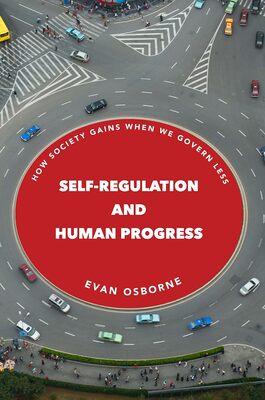
Self-Regulation and Human Progress: How Society Gains When We Govern Less
Evan Osborne
Most of us are familiar with free-market competition: the idea that society and the economy benefit when people are left to self-regulate, testing new ideas in pursuit of profit. Less known is the fact that this theory arose after arguments for the scientific method and freedom of speech had gone mainstream—and that all three share a common basis.
Proponents of self-regulation in the realm of free speech have argued that unhindered public expression causes true ideas to gain strength through scrutiny. Similarly, scientific inquiry has been regarded as a self-correcting system, one in which competing hypotheses are verified by multiple independent researchers. It was long thought that society was better left to organize itself through free markets as opposed to political institutions. But, over the twentieth century, we became less confident in the notion of a self-regulating socioeconomy. Evan Osborne traces the rise and fall of this once-popular concept. He argues that—as society becomes more complex—self-regulation becomes more efficient and can once again serve our economy well.
-
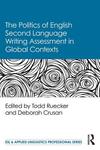
The Politics of English Second Language Writing Assessment in Global Contexts
Todd Ruecker and Deborah J. Crusan
Reflecting the internationalization of the field of second language writing, this book focuses on political aspects and pedagogical issues of writing instruction and testing in a global context. High-stakes assessment impacts the lives of second language (L2) writers and their teachers around the world, be it the College English Test in China, Common Core aligned assessments in the U.S., English proficiency tests in Poland, or the material conditions (such as access to technology, training, and other resources) affecting a classroom. With contributions from authors working in 10 different countries in a variety of institutional contexts, the chapters examine the uses and abuses of various writing-related assessments, and the policies that determine their form and use. Representing a diverse range of contexts, methods, and disciplines, the authors jointly call for more equitable testing systems that consider the socioeconomic, psychometric, affective, institutional, and needs of all students who strive to gain access to education and employment opportunities related to English language proficiency.
-
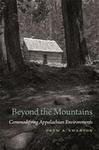
Beyond the Mountains: Commodifying Appalachian Environments
Drew A. Swanson
Beyond the Mountains explores the ways in which Appalachia often served as a laboratory for the exploration and practice of American conceptions of nature. The region operated alternately as frontier, wilderness, rural hinterland, region of subsistence agriculture, bastion of yeoman farmers, and place to experiment with modernization. In these various takes on the southern mountains, scattered across time and space, both mountain residents and outsiders consistently believed that the region’s environment made Appalachia distinctive, for better or worse.
With chapters dedicated to microhistories focused on particular commodities, Drew A. Swanson builds upon recent Appalachian studies scholarship, emphasizing the diversity of a region so long considered a homogenous backwater. While Appalachia has a recognizable and real coherence rooted in folkways, agriculture, and politics (among other things), it is also a region of varied environments, people, and histories. These discrete stories are, however, linked through the power of conceptualizing nature and work together to reveal the ways in which ideas and uses of nature often created a sense of identity in Appalachia. Delving into the environmental history of the region reveals that Appalachian environments, rather than separating the mountains from the broader world, often served to connect the region to outside places.
-

Federal Solutions to Ethnic Problems: Accommodating Diversity
Liam Anderson
Exploring five distinct models of federal arrangement, this book evaluates the relative merits of each model as a mechanism for managing relations in ethnically divided societies. Two broad approaches to this issue, accommodation and denial, are identified and, from this, five distinct models of federal arrangement are derived. The models; ethnic, anti-ethnic, territorial, ethno-territorial, and federacy, are defined and then located within their broader theoretical tradition.
Detailed case studies are used to evaluate the strengths and weakness of each model and highlight patterns in the success and failure rates of the universe of post-1945 federal arrangements. From this it is clear that two forms of ethnically defined federal arrangement – federacy and ethno-territorial federalism, are associated with low failure rates, while ethnic federalism has enjoyed a far higher rate of failure. The reasons for this are examined and the implications of this for the design of federal systems in ethnically divided societies are assessed.
Federal Solutions to Ethnic Problems: Accommodating Diversity advances a new argument within the field of comparative politics, that certain forms of federal arrangement are systematically more successful than others in ameliorating ethnically conflicted societies and is essential reading for students and scholars with an interest in politics and the Middle East.
-
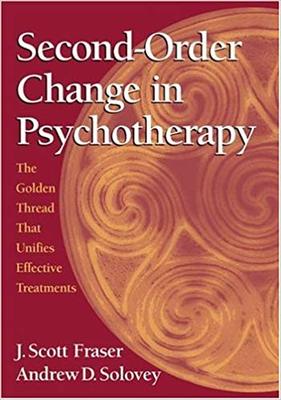
Second-Order Change in Psychotherapy: The Golden Thread That Unifies Effective Treatments
J. Scott Fraser and Andy Solovey
After more than 40 years of research, a substantial body of evidence has shown psychotherapy to be helpful in ameliorating psychological suffering. This is seldom questioned in professional circles, yet intense debate persists over how, when, and why therapy works. Those claiming to know the answers fall into two main camps, one arguing that some empirically supported treatments are therapeutic for specific problems, while others are less effective. The other camp posits that all approaches work equally well, as long as a strong therapist client relationship and other common curative factors are present. Can both doctrines be correct? Second-Order Change in Psychotherapy: The Golden Thread That Unifies Effective Treatments asserts that they can, but what is needed is a unifying framework of change that underlies both positions. Drs. Fraser and Solovey identify that framework as second-order change in psychotherapy, or the golden thread that runs through the labyrinth of all effective therapies. To better elucidate this, first-order change refers to solutions that do not change the problem but that create stability, while second-order change transforms the first-order solutions, resulting in a resolution of the problem. In this fascinating and rich book written for researchers, practical theorists, and policy makers, the authors show how second-order change is at the core of all effective treatments and demonstrate how to creatively employ specific, targeted approaches in an interpersonal context of shared respect, empathy, and compassion.
-
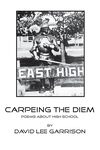
Carpeing the Diem: Poems about High School
David Lee Garrison
David Lee Garrison executes, with cavalier ease and elegance, two dozen poems about high school. Though their situations and characters are familiar (high school is one of the most conventional and predictable of American institutions), the poems are always fresh, and the poet’s deployment of form and rhyme, as well as his take on urban legend, are a delight, ‘Terre Haute’ and ‘Hook Man’ being especially delicious.
-
Comparative Politics of the Global South: Linking Concepts and Cases
December Green and Laura M. Luehrmann
In this now classic text, December Green and Laura Luehrmann show how history, economics, and politics converge to create the realities of life in the Global South. The authors offer an innovative blend of theory and empirical material as they introduce the politics of what was once called the ""third world"".
-
Calcium Entry Channels in Non-Excitable Cells
J. Ashot Kozak and James W. Putney Jr.
Calcium Entry Channels in Non-Excitable Cells focuses on methods of investigating the structure and function of non-voltage gated calcium channels. Each chapter presents important discoveries in calcium entry pathways, specifically dealing with the molecular identification of store-operated calcium channels which were reviewed by earlier volumes in the Methods in Signal Transduction series. Crystallographic and pharmacological approaches to the study of calcium channels of epithelial cells are also discussed. Calcium ion is a messenger in most cell types. Whereas voltage gated calcium channels have been studied extensively, the non-voltage gated calcium entry channel genes have only been identified relatively recently. The book will fill this important niche.
-
Explaining Suicide: Patterns, Motivations, and What Notes Reveal
Cheryl L. Meyer, Taronish H. Irani, Katherine A. Hermes, and Betty Yung
Explaining Suicide: Patterns, Motivations, and What Notes Reveal discusses top motivations for suicide, how they differ between note leavers and non-note leavers, and how we can use the information to create better prevention tactics.
As 15% to 40% of suicides leave suicide notes, a valuable clue to help unlock the motivation of the suicidal person, they are an integral tool for study. This book represents the first large scale analysis (1200+ subjects) of motivations for suicide across multiple ages in the same time period, 13% of whom left notes.
-
Biological Safety: Principles and Practices
Dawn P. Wooley and Karen Byers
Biological safety and biosecurity protocols are essential to the reputation and responsibility of every scientific institution, whether research, academic, or production. Every risk―no matter how small―must be considered, assessed, and properly mitigated. If the science isn't safe, it isn't good. Now in its fifth edition, Biological safety: Principles and Practices remains the most comprehensive biosafety reference.
Led by editors Karen Byers and Dawn Wooley, a team of expert contributors have outlined the technical nuts and bolts of biosafety and biosecurity within these pages. This book presents the guiding principles of laboratory safety, including: the identification, assessment, and control of the broad variety of risks encountered in the lab; the production facility; and, the classroom.
Specifically, Biological Safety covers
- protection and control elements―from biosafety level cabinets and personal protection systems to strategies and decontamination methods
- administrative concerns in biorisk management, including regulations, guidelines, and compliance
- various aspects of risk assessment covering bacterial pathogens, viral agents, mycotic agents, protozoa and helminths, gene transfer vectors, zooonotic agents, allergens, toxins, and molecular agents as well as decontamination, aerobiology, occupational medicine, and training
A resource for biosafety professionals, instructors, and those who work with pathogenic agents in any capacity, Biological safety is also a critical reference for laboratory managers, and those responsible for managing biohazards in a range of settings, including basic and agricultural research, clinical laboratories, the vivarium, field study, insectories, and greenhouses.
-
Child Abuse Pocket Atlas Series, Volume 2: Sexual Abuse
Randell Alexander, Angelo P. Giardino, Debra Esernio-Jenssen, Jonathan D. Thackeray, Joyce Adams, Suzanne P. Starling, David L. Chadwick, and Rich D. Kaplan
Sexual abuse of children is an especially delicate matter, and each reported case should be treated with exacting care. Accurate identification and appropriate response to symptoms of sexual maltreatment in children is essential to resilient, long-term recovery for survivors. Therefore, it is incumbent upon those professionals who care for and represent the interests of survivors to recognize cases of childhood sexual abuse and to respond expediently, in the best interest of the survivors.
This new pocket atlas, the second addition to an ongoing series on child abuse, will support medical practitioners and other affiliated sexual assault response providers in identifying and interpreting the physical signs and symptoms of sexual abuse in children. With nearly 400 full-color exam photos and corresponding case studies, as well as detailed refreshers on anogenital anatomy, exam equipment, and typical findings, readers in medicine, law enforcement, and social service will all benefit from this compact photographic reference and guide.
-
Child Abuse Pocket Atlas Series, Volume 1: Skin Injuries
Randell Alexander, Angelo P. Giardino, Debra Esernio-Jenssen, Jonathan D. Thackeray, and David L. Chadwick
Skin injuries are among the most common, and, certainly, the most visible, symptoms of physical abuse in children. Because professionals working with children will, at times, encounter such injuries, it is vital they be able to recognize abusive burns, bruises, and other skin injuries in order to differentiate them from accidental injuries and to respond appropriately when encountered.
Child Abuse Pocket Atlas Series, Volume 1: Skin Injuries is expertly designed by and for first responders, medical practitioners, and social service professionals who routinely work with children. Any readers who encounter, or may encounter, cases of child abuse in the course of their work will enjoy the benefit of a pocket-sized photographic reference to better inform and support the identification of abusive skin injuries in children. -
Child Abuse Pocket Atlas Series, Volume 4: Investigation, Documentation, and Radiology
Randell Alexander, Angelo P. Giardino, Debra Esernio-Jenssen, Jonathan D. Thackeray, and David L. Chadwick
In the investigation of child abuse, consistent investigative protocol and clear, thorough documentation of facts and findings are essential to ensuring justice for victims, both for those who survive and for those who do not. In order to achieve the best possible results in such cases, multidisciplinary investigative teams of first responders, law enforcement, and medical practitioners should be well prepared for the process of investigation and documentation as they work in tandem toward a just end for every case of abuse.
This new pocket atlas, part of an ongoing series on child abuse, offers nearly 500 full-color photos detailing proper approaches to crime scene investigation, physical and postmortem examinations, and photodocumentation, as well as a section on radiology and common fractures in cases of child maltreatment. Readers in medicine, law enforcement, and any other readers involved with child abuse and death investigations will enjoy the benefit of a compact and accessible guide to investigation and documentation. -

Music Healing in a World Full of Sound
Christina E. Borchers
How does sound impact your brain? And how can we use music to gain wholeness in ways that pharmaceutical medicine is limited?
In this fusion between music and science, pianist turned pharmacology and toxicology scientist, Christina Borchers, guides us through the powerful intersection of the two fields. The body is naturally capable of self-regulation and healing. Music therapy activates our own pathways to begin working. Drawing upon breakthrough studies in music therapy along with music history, Borchers exposes:
• How sound is the most dominant of the senses
• That there are two forms of music: the music of playing and the music of listening
• Why we get excited by songs from our childhood
• How to form intimate connections within the community
• What music therapy can teach us about ourselves
There is no question that music is an emotional companion in all stages of our lives. Whether you are already a performer or just a lover of music, Borchers’ The Significance of Sound and The Dynamic of Music Therapy will help you to find your unique relationship with sound. -
What Matters?: Putting Common Sense to Work
John M. Flach and Fred Voorhorst
A cognitive psychologist and an industrial design engineer draw from their experiences trying to make technology work for people to reflect on the foundations of Cognitive Science and Product Design. This work is motivated by the sense that there is a large gap between the type of experiences studied in laboratories and experiences of people working with every day technology. This has led the authors to question the metaphysical foundations of cognitive science and to suggest alternative directions that might provide better insights for design. An important inspiration for this alternative direction is Pirsig’s Metaphysics of Quality described in Zen and the Art of Motorcycle Maintenance and Lila. The goal is to move beyond ‘information processing’ and the computer metaphor, toward ‘meaning creation’ as inspired by recent discoveries in dynamics and selforganizing systems. This book takes the reader on a journey beyond the conventional dichotomy of mind and matter to explore a world of ‘what matters’ in hopes of inspiring the design of human-technology systems that work beautifully.
Printing is not supported at the primary Gallery Thumbnail page. Please first navigate to a specific Image before printing.