-
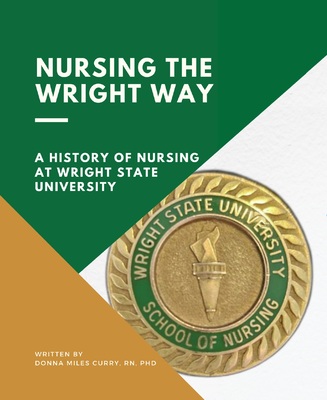
Nursing the Wright Way: A History of Nursing at Wright State University, 1973-2023
Donna Miles Curry
This book explores the history of an innovative nursing education program in Dayton, Ohio from its creation in the 1970s until 2023. On the cutting edge with a theory driven curriculum this program went from BSN, adding the master's degree with advanced practice options and also a DNP.
-

Food Waste, Food Insecurity, and the Globalization of Food Banks
Daniel N. Warshawsky
Food banks—warehouses that collect and systematize surplus food—have expanded into one of the largest mechanisms to redistribute food waste. From their origins in North America in the 1960s, food banks provide food to communities in approximately one hundred countries on six continents. This book analyzes the development of food banks across the world and the limits of food charity as a means to reduce food insecurity and food waste. Based on fifteen years of in-depth fieldwork on four continents, Daniel Warshawsky illustrates how and why food banks proliferate across the globe even though their impacts may be limited. He suggests that we need to reformulate the role of food banks. The mission of food banks needs to be more realistic, as food surpluses cannot reduce food insecurity on a significant scale. Food banks need to regain their institutional independence from the state and corporations, and incorporate the knowledge and experiences of the food insecure in the daily operations of the food system. These collective changes can contribute to a future where food banks play a smaller but more targeted role in food systems.
-
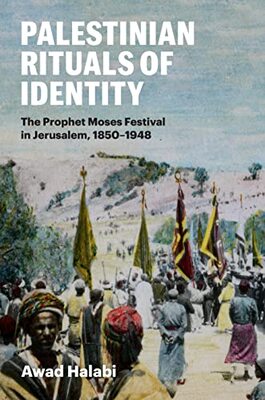
Palestinian Rituals of Identity: The Prophet Moses Festival in Jerusalem, 1850-1948
Awad Halabi
Members of Palestine’s Muslim community have long honored al-Nabi Musa, or the Prophet Moses. Since the thirteenth century, they have celebrated at a shrine near Jericho believed to be the location of Moses’s tomb; in the mid-nineteenth century, they organized a civic festival in Jerusalem to honor this prophet. Considered one of the most important occasions for Muslim pilgrims in Palestine, the Prophet Moses festival yearly attracted thousands of people who assembled to pray, conduct mystical forms of worship, and hold folk celebrations.
Palestinian Rituals of Identity takes an innovative approach to the study of Palestine’s modern history by focusing on the Prophet Moses festival from the late Ottoman period through the era of British rule. Halabi explores how the festival served as an arena of competing discourses, with various social groups attempting to control its symbols. Tackling questions about modernity, colonialism, gender relations, and identity, Halabi recounts how peasants, Bedouins, rural women, and Sufis sought to influence the festival even as Ottoman authorities, British colonists, Muslim clerics, and Palestinian national leaders did the same. Drawing on extensive research in Arabic newspapers and Islamic and colonial archives, Halabi reveals how the festival has encapsulated Palestinians’ responses to modernity, colonialism, and the nation’s growing national identity.
-

The Summers
Ronya Othmann and Gary Schmidt
Ronya Othmann’s debut novel narrates the coming of age of Leyla, a Yazidi–Kurdish–German girl. She spends the school year in her mother’s home country of Germany but travels every summer to her father’s home village in Syria, near the Turkish border. She knows its smells and tastes. She knows its stories. She knows where the Yazidi villagers keep their suitcases hidden, should they need to escape again. And she watches from afar, horrified, as ISIS troops move on the village, threatening the lives of her grandparents, aunts, uncles, cousins, and friends. Leyla’s sexual awakening proves far less traumatic than her growing disenchantment with her German classmates and friends, who appear completely indifferent to the fate of her Yazidi community. Thoughtful and poignant, The Summers addresses issues of gender, sexuality, cultural difference, politics, and identity. Othmann draws readers into multiple worlds, ultimately revealing the hopes and dreams that bind us all together when forces threaten to tear us apart.
-
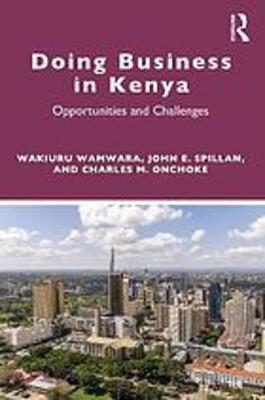
Doing Business in Kenya: Opportunities and Challenges
Wakiuru Wamwara, John E. Spillan, and Charles M. Onchoke
A deep dive into a success story in African business development, this book provides a multi-layered perspective on the realities of doing business in Kenya.
The book’s detailed information about the economic, social, technological, and cultural dimensions of Kenyan society enables a greater understanding of the major issues affecting business development, and actionable recommendations clarify the possible paths to starting and developing a business venture in Kenya. Given Africa’s heterogeneity, it cannot be perfectly represented by one country. Still, Kenya closely mirrors Africa’s major economic trends and cultural values: understanding Kenya’s business landscape provides invaluable skills to do business throughout Africa.
Businesspeople, policymakers, investors, students, and scholars will value this book’s in-depth first-hand knowledge to help them make informed decisions about doing business in Africa or Kenya specifically.
-

Vital Statistics on American Politics
Jeffrey L. Bernstein and Mandy Shannon
There is no other source that provides in one place the wide range and depth of insight found in Vital Statistics on American Politics (VSAP), published since 1988. VSAP provides historical and statistical information on all aspects of American politics:
- Political parties
- Voter turnout
- Public opinion
- Campaign finance
- Media perspective and influence, congressional membership and voting patterns
- The presidency and executive branch
- Military policy and spending
- Supreme Court and federal court make-up and caseloads
- Foreign, social, and economic policy
In over 230 tables and figures, students and professional researchers will find chapters devoted to key subject areas such as elections and political parties, public opinion and voting, the media, the three branches of U.S. government, foreign, military, social and economic policy, and much more. This book provides a vivid and multifaceted portrait of the broad spectrum of United States politics and policies.
Along with updated and new data content, this edition offers brand new data literacy lessons that take a "guide on the side" approach to teach data researchers how to wade through the sea of data and do the difficult work of grappling for the meaning of the data on their own. Lessons include understanding descriptive representation data, comparing data over time, noticing gaps in data, unpacking dichotomies of public opinion, and more.
-
Linking Assignments to Assessments: A Guide for Teachers
Deborah Crusan and Todd Ruecker
Linking Assignments to Assessments is designed for teachers in training in TESOL programs, future preK–12 teachers, and practicing instructors who need to integrate assessment into classrooms. Educators seeking fair and accessible assessment practices for English learners will find helpful information on language acquisition and differentiated instruction. The book shares foundational information on the importance of assessment literacy and on how language acquisition, student backgrounds, and language standards need to be considered. Linking Assignments to Assessments offers step-by-step instructions on creating effective assessments for listening and reading, speaking and writing, grammar and vocabulary. Teachers are provided context for understanding standardized assessments and strategies to advocate for and prepare English learners in high-stakes assessment contexts. Each chapter includes activities, discussion questions, and strategies for developing an assessment philosophy to help educators link their theory and practice.
-

Blackout: a thriller
Erin Flanagan
Summary: Seven hard-won months into her sobriety, sociology professor Maris Heilman has her first blackout. She chalks it up to exhaustion, though she fears that her husband and daughter will suspect she's drinking again. Whatever their cause, the glitches start becoming more frequent. Sometimes minutes, sometimes longer, but always leaving Maris with the same disorienting question: Where have I been? Then another blackout lands Maris in the ER, where she makes an alarming discovery. A network of women is battling the same inexplicable malady. Is it a bizarre coincidence or something more sinister? What do all the women have in common besides missing time? Or is it who they have in common? In a desperate search for answers, Maris has no idea what's coming next just the escalating paranoia that her memories may be beyond her control, and that everything she knows could disappear in the blink of an eye
-

Miller Knew: An Appalachian Noir and Suspense Story
Scott Geisel
Deep in the Appalachian hills of Virginia, a brother and sister are in trouble. Miller’s ma is gone. His pa is gone. What else can be taken before he fights back? Miller knows the kind of men who inhabit these hills. He doesn’t want to become one of them. How can he protect himself and his sister without losing his soul? From the author of the critically acclaimed Jackson Flint mystery novels.
-
Their Determination to Remain : A Cherokee Community's Resistance to the Trail of Tears in North Carolina
Lance Greene
In the 1830s, the U.S. government forcibly removed 60,000 Native Americans from their ancestral homelands in the southeastern United States to so-called Indian Territory west of the Mississippi River. The relocated peoples suffered from exposure, disease and starvation while en route on what came to be known as the Trail of Tears.
In 1838, hundreds of Cherokees in the mountains of Southern Appalachia avoided the invading U.S. Army and remained in the region, including a community of about 100 Cherokees hiding in the steep mountains of North Carolina.
-
Nietzsche's Immoralism: Politics as First Philosophy
Donovan Miyasaki
Nietzsches Immoralism begins a two-volume critical reconstruction of a socialist, democratic, and non-liberal Nietzschean politics. Nietzsches ideal of amor fati (love of fate) cannot be individually adopted because it is incompatible with deep freedom of agency. However, we can create its social conditions thanks to an underappreciated aspect of his will-to-power psychology. We are driven not toward domination and conquest but toward resistance, contest, and playa heightened feeling of power provoked by equal challenges that enables the non-instrumental affirmation of suffering. This incompatibilist, anti-teleological psychology leads to Nietzsches distinctive immoralism: the abandonment of cultural means of human improvement for a historical materialist politics of breeding that produces future higher types through changes to our political orders material conditions. Politics becomes first philosophy: it is not grounded in moral values but is instead the very source of their legitimacy. Moreover, despite Nietzsches professed aristocratism, his immoralism offers a stronger foundation for a renewed left, attacking conservative politics at its very root: the belief in moral order, authority, and responsibility
-
Politics After Morality : Toward a Nietzschean Left
Donovan Miyasaki
This book completes the project, begun in Nietzsches Immoralism: Politics as First Philosophy, of critically reconstructing a Nietzschean left politics. Nietzsche's incompatibilist ideal of amor fati requires reconceiving legitimacy as the breeding of a people whose material conditions enable it to affirm its social order. Justice is founded in a future, higher types right to exist against present individuals who internalize the contradictions of past societies. In opposition to Nietzsches self-undermining aristocratism, this right can only be realized through a universal promotion of the pluralistic unity of the manifold soul, secured by an equally manifold form of democracy. Against the covert aristocratism of liberal proceduralism, authentic democracy produces a true people grounded in shared, concrete happiness, requiring a comprehensive egalitarianism maintained by a permanent socialist state and achievable only through a populist, coalitional politics across identities that radically transforms the material conditions of our shared social life
-
Shapeshifting Subjects: Gloria Anzaldúa’s Naguala and Border Arte
Kelli D. Zaytoun
Kelli D. Zaytoun draws on Gloria Anzaldúa's thought to present a radically inclusive and expansive approach to selfhood, creativity, scholarship, healing, coalition-building, and activism. Zaytoun focuses on Anzaldúa's naguala/ shapeshifter, a concept of nagualismo. This groundbreaking theory of subjectivity details a dynamic relationship between “inner work” and "public acts" that strengthens individuals' roles in social and transformative justice work. Zaytoun's detailed emphasis on la naguala, and Nahua metaphysics specifically, brings much needed attention to Anzaldúa's long-overlooked contribution to the study of subjectivity. The result is a women and queer of color, feminist-focused work aimed at scholars in many disciplines and intended to overcome barriers separating the academy from everyday life and community.
An original and moving analysis, Shapeshifting Subjects draws on unpublished archival material to apply Anzaldúa's ideas to new areas of thought and action.
-

Federal Solutions for Fragile States in the Middle East: Right-Sizing Internal Borders
Liam Anderson and Vaughn P. Shannon
In most regions of the world, federalism (territorial autonomy) is used as a successful institutional means of dispersing political power and accommodating ethnic, religious, and cultural diversity. The Middle East is an exception. Aside from the anomalous case of the U.A.E and Iraq's troubled experiment with federalism, Middle Eastern regimes have largely resisted efforts to decentralize political power. As a result, the norm in the region has been highly centralized, unitary systems that have, more often than not, paved the way for authoritarian rule or played witness to serious internal fragmentation and conflict divided along ethnic or religious lines.
Federal Solutions for Fragile States in the Middle East makes an argument for the implementation of federalism in the post-conflict states of the Middle East. The argument operates on two levels: the theoretical and the practical. The theoretical case for federalism is backed by empirical evidence, but to accurately evaluate the practical and logistical feasibility of its implementation in any given case requires detailed knowledge of "real world" political realities. The book's focus is on four post-conflict states — Iraq, Syria, Yemen, and Libya — though the arguments advanced within have broad regional applicability.
-

Deer Season
Erin Flanagan
"Over a weekend a teenage girl goes missing. Hal, a mentally challenged farmhand, returns from a hunting trip with a flimsy story about the blood in his truck and a dent near the headlight. When the situation escalates from that of a missing girl to something more sinister, Alma Costagan and her husband are forced to confront what Hal might be capable of"-- Provided by publisher
-

Firepower: How Weapons Shaped Warfare
Paul D. Lockhart
The history of warfare cannot be fully understood without considering the technology of killing. In Firepower, acclaimed historian Paul Lockhart tells the story of the evolution of weaponry and how it transformed not only the conduct of warfare but also the very structure of power in the West, from the Renaissance to the dawn of the atomic era.
Across this period, improvements in firepower shaped the evolving art of war. For centuries, weaponry had remained simple enough that any state could equip a respectable army. That all changed around 1870, when the cost of investing in increasingly complicated technology soon meant that only a handful of great powers could afford to manufacture advanced weaponry, while other countries fell behind. Going beyond the battlefield, Firepower ultimately reveals how changes in weapons technology reshaped human history.
-
Becoming a Master Manager : a competing values approach
Robert E. Quinn, David S. Bright, and Rachel Sturm
Summary: "With this edition, we welcome a new coauthor, Rachel Sturm, to the author team. Rachel is a highly accomplished scholar who has received numerous teaching and research awards. We are pleased to have her contribution and insight as we continue to work on the competing values framework in this edition and in the coming years. Nearly four decades have passed since the competing values framework was originally developed. Becoming a Master Manager was one of the first management development texts to emphasize the importance, not only of a conceptual understanding of managerial skills, but also of the need to practice these skills through learning exercises. Over the intervening decades, management education has shifted decisively in the same direction, where the orientation is to learn by doing. A large number of skills-focused managerial texts is the evidence of the value of our original approach"-- Provided by publisher
-
Humor in Advertising: Classic Perspectives and New Insights
Marc G. Weinberger, Charles S. Gulas, and Charles R. Taylor
Humor has long been one of the most common approaches used in advertising. Whether in a big televised event like the Super Bowl or in new forms of digital advertising, everyone is exposed to funny ads, some of which both entertain the audience and help sell a product. Yet, the use of humor in advertising is complex; clearly not all humorous ads are successful.
This comprehensive volume both summarizes the cumulative state of knowledge on humor in advertising and provides new cutting-edge research on key topics such as humor’s use in conjunction with emotional and sexual appeals, its use in digital advertising, and issues related to gender and cross-cultural applicability. Special emphasis is placed on defining humorous advertising and types of humor used, as well as outlining what conditions work for advertisers. The chapters examine humor in advertising and add insights on several cutting-edge issues in this stream of research. An overview article summarizing the overall body of literature accumulated over 50 years of research on humorous advertising defines types of humorous appeals. The degree to which humor is effective and the boundary conditions associated with when and how it works best in advertising is discussed. New research articles further contribute to cumulative knowledge by exploring the interaction of humor with other issues and techniques such as whether it travels internationally, gender issues, its use in conjunction with emotional and sexual appeals, and its presence in the digital contexts. The book concludes with an in-depth look at the evolution of humorous appeals over the oldest traditional advertising medium—outdoor advertising.
The chapters in this book were originally published in International Journal of Advertising.
-
Toward the Bad I Kept on Turning: A Confessional Novel
Stephen Paul Foster
“Who will guard the guardians?” is the theme of this fictional “dumpster-dive” into the deep vaults of governmental and university corruption in the baby-boomers’ America. The anti-hero conman, a fusion of Harry Flashman and Forest Gump, takes the reader on a tour of his life’s story. He embarks on one hair-raising adventure after another, many of which draw him into relationships with some of the better-known movers and shakers of the era such as Bill and Hillary Clinton, Raul Castro, Jim Jones, Slobodan Milošević and John McCain. His adventures always seem to be “turning bad,” whether conniving with E. Howard Hunt to overthrow Chile’s Salvador Allende, bombing government buildings at the behest of Bill Ayers or serving as a hitman for Fidel Castro. From our lovable but cynical anti-hero we get a conman’s perspective and sardonic commentary on many of the events that defined America in the last fifty years – the Vietnam War, JFK’s assassination, 9-11, the CIA’s secret operations, the bombing of Kosovo, the wave of U.S. domestic terrorism of the 1970s and the election of Barack Obama.
-
Guide to Intellectual Disabilities: A Clinical Handbook
Julie P. Gentile, Allison Cowan, and David Dixon
This book serves as a reader-friendly training and reference resource for medical professionals working with dual diagnosis (DD) patients. Written by experts in the field, the text covers the unique psychiatric and medical assessment topics as well as neurologic conditions, best interviewing techniques, medication guidelines, and other topics that may be challenging when working with a DD patient. Each chapter opens with case vignettes to easily demonstrate a particular scenario and is followed up with concise, practical information. All chapters include tables that summarize the clinical pearls as well as the DSM-5 and DM-ID-2 diagnostic criteria that is most vital to care. Guide to Intellectual Disabilities is an excellent resource for all clinicians who will work with DD patients, including those in child and adult psychiatry, pediatrics, family physicians, nurse practitioners, psychologists, and all others.
-
Unifying Effective Psychotherapies: Tracing the Process of Change
J. Scott Fraser
The area of psychotherapy has adopted positivist paradigm and its medical model and clinical trials methods as it has perused answers to what works in psychotherapy. This book is about unifying effective approaches to psychotherapy—that is, finding the common process underlying all therapeutic change. It comprises three parts containing 12 chapters. Part I tracks the journey taken so far by researchers addressing what works in psychotherapy. It looks at progress made in research addressing evidence-supported psychotherapy. The book then looks closer at how to find the "truth" about what works, and describes alternative views on the nature of human interaction. It presents a long-standing alternate paradigm, termed a process view. The book suggests that this alternate paradigm, which incorporates the nature of change, the idea of process-based systems, and the influence of context, explains the common process underlying all effective psychotherapies. Part II examines the therapies that work for a range of different psychological and interpersonal problems to see whether the predictions of the process of change view hold up as a "golden thread" running through and connecting them all. It addresses evidence-supported treatments for anxiety, depression, posttraumatic stress disorder, and the interpersonal problems between couples and among family members. If the predictions of the process of change paradigm fit the data on all of these evidence-supported approaches across all of these problem areas, then a strong case will emerge for using it in the future to unify effective psychotherapies. Finally, Part III translates this process view into clinical practice. (PsycINFO Database Record (c) 2019 APA, all rights reserved)
-

Arterial Chemoreceptors: New Directions and Translational Perspectives (Advances in Experimental Medicine and Biology, 1071)
Estelle B. Gauda, Maria Emilia Monteriro, Nanduri Prabhakar, Christopher N. Wyatt, and Harold D. Shultz
This volume contains reviews and brief research articles from participants attending the International Society for Arterial Chemoreception meeting, to be held in the USA (July 2017). Each article contains original data and represents up-to-date information concerning the carotid body and oxygen sensing in health and disease. This volume is a required text for all researchers in the field of arterial chemoreception and will provide a valuable reference source for years to come.
-

Mount Saint John Nature Preserve
Ronald R. Geibert
Mount Saint John Nature Preserve features a collection of photographic panoramas by Ronald Geibert from 2017-2018 of the Mount Saint John Nature Preserve in Dayton, Ohio.
Printing is not supported at the primary Gallery Thumbnail page. Please first navigate to a specific Image before printing.